Leather vs Fabric Car Seats: How to Clean and Protect Each
A complete care guide for both leather and fabric car seats. Learn the right cleaning methods, products, and protection strategies for your specific upholstery type.
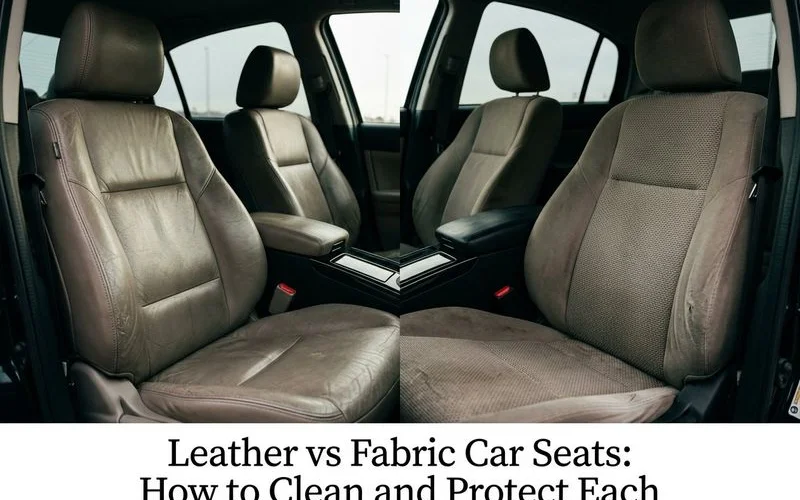
Two Materials, Two Different Care Approaches
Leather and fabric car seats require fundamentally different care routines.
Using the wrong products or techniques on either material causes damage that is expensive to reverse.
We often see well-intentioned owners use harsh scrubbers on leather or water-heavy methods on fabric.
Understanding the specific needs of your upholstery type is the foundation of effective interior care.
In Boise’s dry, high-altitude climate, both materials face unique challenges that require specific attention.
Replacing a single car seat can cost between $250 and $750 for basic materials, while a full leather reupholstery job often exceeds $2,000.
Most vehicle owners we speak with want to avoid that expense but aren’t sure which products actually protect their investment.
From our experience, the difference between a seat that cracks in three years and one that lasts for ten usually comes down to moisture management.
We will break down the exact chemistry, tools, and schedules you need to maintain both materials in this specific region.
Caring for Leather Seats
Identifying Your Leather Type
You need to know exactly what you are working with before applying any chemical.
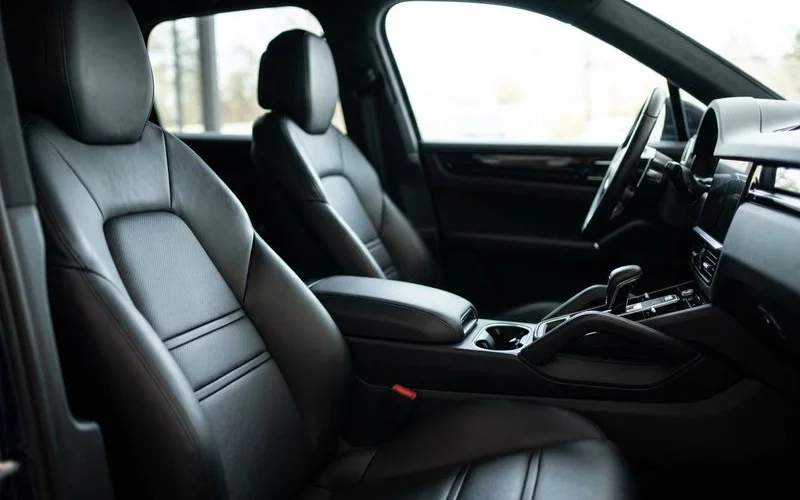
Most modern vehicle “leather” is actually pigmented leather coated with a clear polyurethane layer.
We recommend a simple “Water Drop Test” to confirm your material type in seconds.
Place a tiny drop of water on an inconspicuous area of the seat.
If the water beads up and sits on the surface, you have coated (protected) leather, which is standard in 90% of cars.
If the water soaks in and darkens the spot immediately, you have uncoated aniline or semi-aniline leather.
Uncoated leather requires highly specialized, wax-based products because standard cleaners will permanently stain it.
The Chemistry of Cleaning
You must use a cleaner with a pH level between 4.5 and 6.5 to match the natural acidity of leather.
Many general-purpose automotive cleaners have a pH of 10 or 11, which is highly alkaline.
We have seen these high-alkaline products strip the polyurethane coating within months, leading to premature peeling.
Always apply your cleaning solution to a high-quality microfiber towel rather than spraying the seat directly.
This method prevents liquid from seeping into the perforation holes where it can rot the foam cushion underneath.
Work the cleaner into the surface using a soft horsehair brush.
Horsehair is sturdy enough to lift dirt from the grain but soft enough to leave the clear coat intact.
Conditioning in a Dry Climate
Boise’s average humidity often drops below 30%, which acts like a vacuum pulling moisture out of your leather.
Leather is technically a skin, and without hydration, its fibers shrink and eventually tear under tension.
We advise applying a water-based conditioner every 60 to 90 days in this region.
Avoid “all-in-one” cleaner-conditioners, as they rarely offer enough hydration for Idaho’s dry summers.
Apply the conditioner generously and let it dwell for at least 20 minutes.
This dwell time allows the polymers to penetrate the coating and reach the hide beneath.
Buff off any excess residue completely to prevent it from attracting dust.
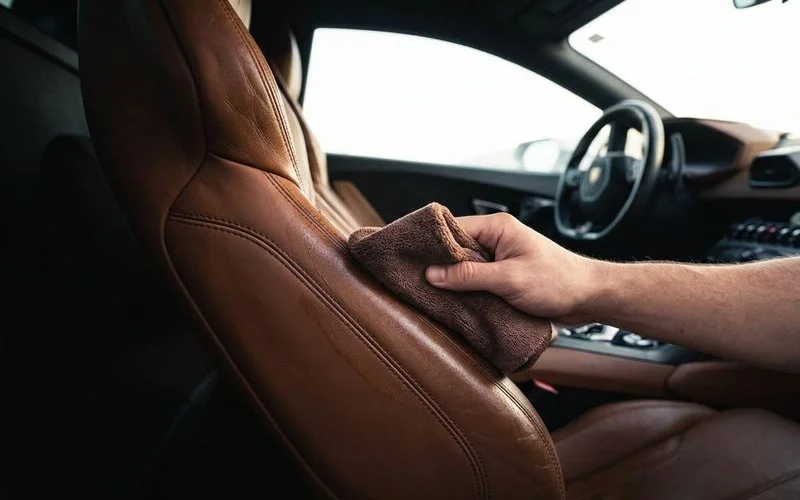
UV Defense Strategy
Solar radiation is the primary cause of color fading and clear coat failure.
Data shows that UV exposure can visibly fade automotive leather in as little as four to six months without protection.
We apply a dedicated ceramic leather shield or UV protectant as the final step in any detail.
This creates a sacrificial barrier that absorbs UV rays before they hit the dye.
Windshield sunshades are also non-negotiable for outdoor parking in this area.
Interior temperatures in Boise can soar from 90°F outside to over 140°F inside within an hour.
That heat cooks the essential oils out of the leather, accelerating the cracking process.
Caring for Fabric Seats
The Vacuum Protocol
Fabric seats trap significantly more particulate matter than leather.
Dust, sand, and pollen settle deep into the foam backing where standard vacuums cannot reach.
We use a high-suction vacuum combined with a “beating” technique to dislodge this embedded debris.
Firmly pat the seat cushion with your hand while holding the vacuum nozzle just above the fabric.
This vibration forces the dust upward where the vacuum can catch it.
Failure to remove this grit results in the fibers being cut from the inside out every time you sit down.
Scientific Stain Removal
Fabric stains require specific chemical reactions to remove safely.
You cannot rely on a single “multipurpose” stain remover for every type of spill.
We categorize stains into three types: tannins, proteins, and oils.
Protein stains like blood or milk require an enzymatic cleaner containing protease to break down the molecular bond.
Tannin stains like coffee or tea respond best to mildly acidic cleaning solutions.
Oil and grease stains need a surfactant-heavy degreaser to lift the lipids from the fiber.
Identify the stain source first, then choose the correct chemistry to solve it.
Deep Cleaning & Extraction
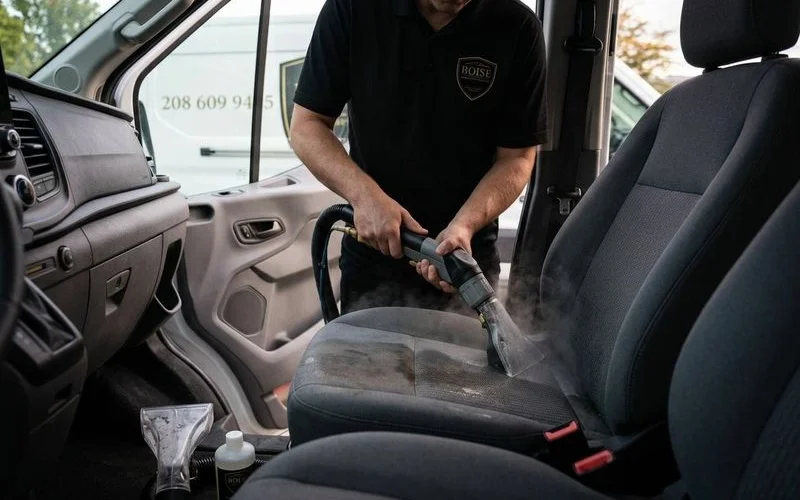
Surface cleaning is maintenance, but hot water extraction is restoration.
Professional extractors heat water to approximately 210°F at the nozzle.
We use this high heat to sanitize the fabric and dissolve stubborn grime instantly.
The machine simultaneously sprays this solution and vacuums it up, leaving the seat only slightly damp.
Avoid soaking your seats with a spray bottle and a shop vac at home.
Trapped moisture that cannot dry quickly will lead to mold growth inside the seat foam.
If you do not have an extractor, use a low-moisture foam cleaner and towel dry immediately.
A Warning on “Faux” Suede
Many modern sports cars use Alcantara or Dinamica, which look like suede but are actually synthetic microfiber.
You must never use a stiff brush or heavy heat on these materials.
We clean Alcantara with a specific dedicated cleaner and a very soft brush.
Rubbing too hard or in circles will cause the fibers to “pill” and look worn out.
Always wipe these materials in straight lines to maintain the uniform appearance of the nap.
Leather vs Fabric: The Maintenance Breakdown
Choosing between these materials often comes down to your lifestyle and willingness to perform maintenance.
We have compiled a direct comparison of the commitment required for each.
| Feature | Leather Seats | Fabric Seats |
|---|---|---|
| Primary Threat | UV Rays & Dehydration (Cracking) | Spills & Embedded Dust (Staining) |
| Cleaning Cost | Higher (Requires pH cleaners & conditioners) | Lower (Simple extractors & vacuums) |
| Boise Risk | High (Heat causes rapid drying) | Medium (Dust traps in fibers) |
| Stain Resistance | Excellent (If coating is intact) | Poor (Requires immediate blotting) |
| Pro Maintenance | Recommended every 3-6 months | Recommended every 6-12 months |
Common Mistakes to Avoid
On Leather
- Using Magic Erasers: These melamine sponges act like 3000-grit sandpaper and will scour off your protective topcoat.
- Oil-Heavy Conditioners: Old-school products like Neatsfoot oil can rot modern stitching and clog the pores of coated leather.
- Ignoring the Seams: Dirt collects in the stitching, acting as an abrasive that saws through the thread over time.
- Silicon-Based Dressings: Shiny dashboard sprays leave a greasy film that amplifies heat and attracts dust.
On Fabric
- Scrubbing Stains: Aggressive rubbing frays the fibers and spreads the stain into a larger permanent mark.
- Using Hot Water on Blood: Heat sets protein stains like blood permanently; always use cold water first.
- Over-Wetting: Soaking the foam creates a breeding ground for mildew that is nearly impossible to remove.
- Dish Soap Residue: Leaving soap in the fabric acts as a dirt magnet, making the seat get dirty faster after cleaning.
When to Call a Professional
Both leather and fabric seats reach points where DIY methods are insufficient.
Deep stains in fabric often require hot water extraction to fully remove.
Cracked or heavily worn leather needs specialized restoration or redyeing.
Persistent odors like smoke or mildew often require ozone treatment or chlorine dioxide vapor.
If your home efforts are not producing the results you expect, professional interior detailing is the next step.
We address the problem thoroughly using commercial-grade equipment.
Professional intervention is often more cost-effective than buying multiple retail products that fail to work.

Conclusion
Proper maintenance of your car seats is an investment in your vehicle’s resale value.
Leather requires hydration and UV protection, while fabric needs regular vacuuming and prompt stain removal.
We recommend auditing your current cleaning supplies to ensure they match your specific upholstery type.
Start with a gentle cleaning this weekend to prevent long-term damage from setting in.
Boise Mobile Auto Detailing Team
Professional detailing specialists serving Boise and the Treasure Valley.