Aircraft vs Automotive Detailing: Why the Products and Process Are Different
Understanding the key differences between aircraft and automotive detailing. From materials to regulations, learn why aviation detailing requires a distinct approach.
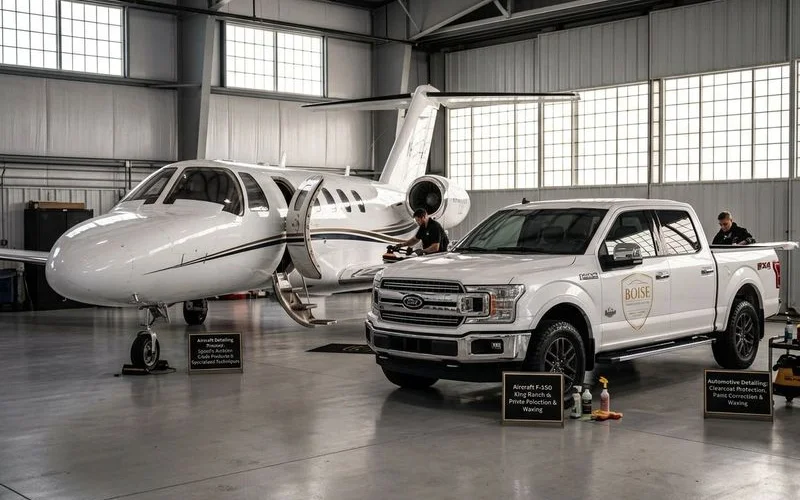
Not Just a Bigger Car
It is easy to assume that detailing an aircraft is just like detailing a car. Both vehicles are essentially painted metal structures that need cleaning and protection from the elements.
But from our experience in aircraft detailing, this assumption is one of the most expensive errors an owner can make.
While both disciplines aim to clean and protect, the engineering realities of aviation require a completely different approach to chemistry and care. A misinterpreted label or the wrong tool here does not just ruin a finish. It can ground a flight and cost thousands in inspections.
For detailing professionals and aircraft owners in the United States, understanding these technical distinctions is the only way to ensure safety and compliance. We are going to break down the specific material differences and the critical product certifications you need to look for.
This guide also covers the operational standards that separate a safe flight from a costly repair.
Material Differences
Exterior Surfaces
Automotive: Vehicle exteriors are typically steel or aluminum panels finished with a primer, base coat, and a clear coat. This clear coat is generally 1.5 to 2.0 mils thick and is designed primarily for gloss and UV resistance. It is chemically resilient and can handle aggressive alkaline soaps without structural risk.
Aircraft: The exterior of an aircraft is a complex assembly of sensitive substrates that behave differently under stress. We frequently work with 2024-T3 aluminum cladding, known as Alclad.
This material is highly susceptible to corrosion if the thin protective aluminum layer is compromised.
You will also encounter composite structures made of carbon fiber or fiberglass. These are often held together by epoxy resins that can be dissolved or weakened by common automotive solvents containing harsh petroleum distillates.
The stakes are higher because the paint on an aircraft is often a high-solids polyurethane designed for flexibility rather than just shine. Brands like Sherwin-Williams Jet Glo or AkzoNobel Aerodur are engineered to expand and contract with the airframe during pressurization cycles.
A standard automotive compound used in exterior detailing might cut through a car’s clear coat effectively. On an aircraft, that same compound can thin the paint to a level that exposes the primer or metal, leading to filiform corrosion.
| Feature | Automotive Paint System | Aircraft Paint System |
|---|---|---|
| Primary Goal | Aesthetic gloss & scratch resistance | Corrosion protection & flexibility |
| Typical Thickness | ~4-6 mils (Total System) | Varies, sensitive to abrasion & chemicals |
| Chemical Risk | Low (Resistant to most consumer soaps) | High (Risk of Hydrogen Embrittlement) |
| Substrate | Steel/Aluminum | Aluminum 2024-T3, Composites, Fabric |
Windows
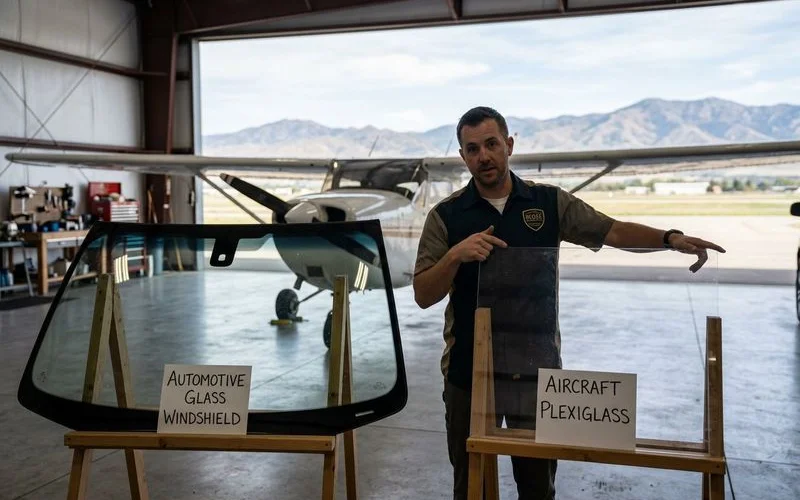
Automotive: Your car’s windshield is made of tempered glass. It is hard, scratch-resistant, and chemically inert. You can spray virtually any glass cleaner on it without fear of damage.
Aircraft: Aviation windows are almost exclusively stretched acrylic or polycarbonate. These materials are soft and extremely sensitive to chemical stress.
We never bring standard glass cleaners near an aircraft because they often contain ammonium hydroxide.
Ammonia attacks the molecular bonds in acrylic. This chemical reaction causes a phenomenon called “crazing.” These are thousands of microscopic cracks that diffuse light and ruin visibility for the pilots.
Once a window is crazed, it fails the ASTM F484 stress test standards and must be replaced. For a mid-size jet like a Hawker 800 or Citation Latitude, a single replacement window assembly can exceed $25,000, not including the labor to install it.
Interior Materials
Automotive: Car interiors are built for durability and ease of cleaning. Materials like vinyl, polyester, and treated leather can withstand scrubbing and wet extraction methods.
Aircraft: The interior of an aircraft is subject to strict flammability regulations. Specifically, we must adhere to FAR 25.853 standards.
Any cleaning agent used during interior detailing must not degrade the fire-retardant treatment of the upholstery.
Wool carpeting is common in aviation for its self-extinguishing properties during the 12-second vertical burn test. However, it requires pH-neutral cleaners approved by the WoolSafe organization to maintain those safety properties.
Excessive moisture is another critical risk that differs from automotive care. Automotive carpet sits on a sealed metal pan. Aircraft carpet often sits directly over aluminum floorboards and control cables.
If you saturate the carpet during cleaning, trapped moisture can corrode the airframe structure beneath the floor. This often leads to failed inspections and massive repair bills.
Product Requirements
The Approval Factor
In the automotive world, product choice is subjective. You might choose a wax because it smells good or is on sale. There is no federal regulation dictating which car wash soap you are allowed to use in your driveway.
Aircraft: Aviation products must pass rigorous laboratory testing to earn their place on a ramp. We only use products that meet specific aerospace material specifications (AMS) or OEM standards.
- Boeing D6-17487: This is the gold standard for exterior cleaners. It proves the product will not cause sandwich corrosion or hydrogen embrittlement.
- AMS 1526C: This specification covers cleaners for aircraft exterior surfaces. It ensures they are water-miscible and safe for painted and unpainted sections.
- ASTM F502: A “Paint Softening Test” that ensures the cleaner won’t soften the paint film or cause discoloration upon baking.
Using a product without these certifications is a gamble with safety. A generic degreaser might clean oil off a belly effectively.
But if it causes hydrogen embrittlement in high-strength steel landing gear components, the metal can shatter under load.
pH and Chemical Composition
Automotive soaps often rely on high pH (alkaline) formulas to strip road grime. While effective on a bumper, these caustic solutions are disastrous for aluminum.
Aircraft: We stick to neutral or mild pH formulas, typically between 6.5 and 8.5. High-alkalinity cleaners accelerate corrosion on aluminum surfaces.
This is specifically dangerous around rivets and lap joints where the solution can become trapped. This trapped fluid creates a galvanic corrosion cell that eats away at the airframe long after the wash is finished.
Process Differences
Approach to Washing
Automotive: Efficiency is key. A foam cannon and a pressure washer are standard tools to blast away dirt quickly. The vehicle is designed to shed water, and door seals are generally robust enough to handle the spray.
Aircraft: Pressure washers are rarely used and often explicitly forbidden by maintenance manuals. High-pressure water can force its way past seals into avionics bays, wheel bearings, and pitot-static systems.
We use a “Dry Wash” or “Low-Flow” technique for most jobs to mitigate this risk.
Pro Tip: Before a single drop of liquid touches the plane, we tape off the static ports and pitot tubes with bright red or orange vinyl tape. These ports measure altitude and airspeed. If water gets trapped inside, it can freeze at altitude and cause critical instrument failure.
Approach to Polishing
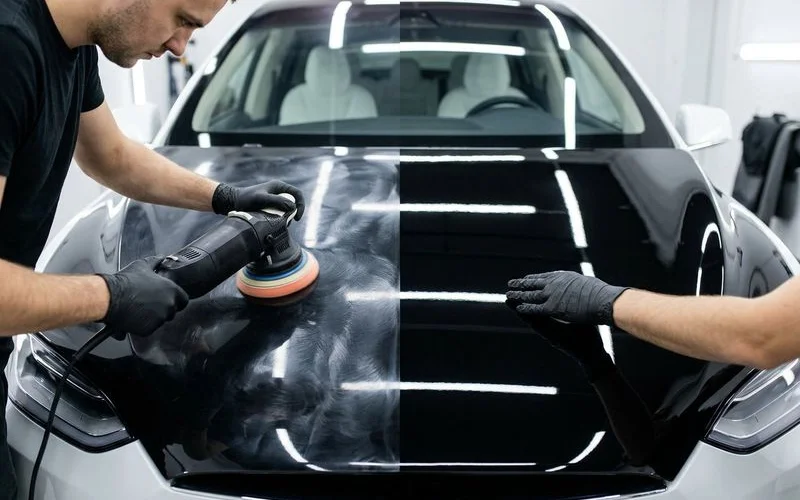
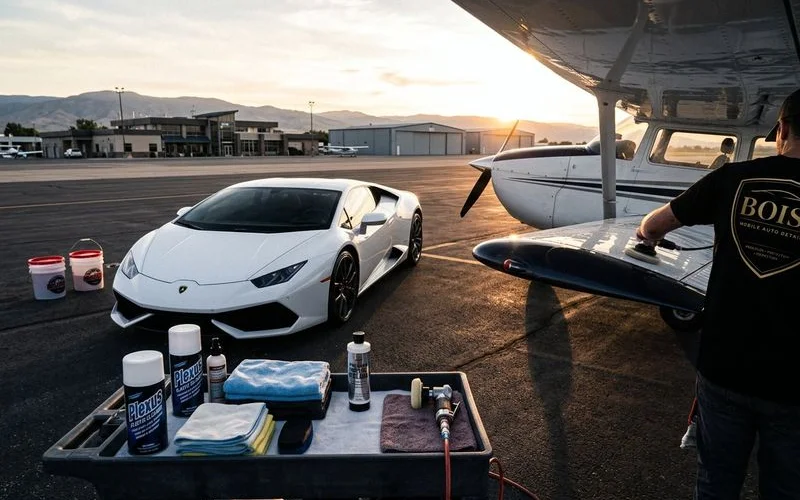
Automotive: Detailers use rotary or dual-action polishers to level the clear coat and remove defects. The heat generation is manageable, and the clear coat is hard enough to take aggressive cutting compounds.
Aircraft: Heat management is critical. Aluminum expands and contracts significantly with temperature changes.
Excessive heat from a polisher can warp thin skin panels or damage composite layers. We use lower speeds and specialized aviation polishes designed to work with the softer paint systems.
For polished aluminum surfaces, known as “brightwork,” the process is even more specialized. It requires an acid-based oxidation remover followed by multiple passes with a drum polisher. This is a labor-intensive process that automotive detailers are rarely equipped to handle.
Environmental and Safety Considerations
Work Environment
Automotive detailing is fairly flexible regarding location. As long as you aren’t dumping oil into a storm drain, residential and commercial restrictions are manageable.
Aircraft: Airport operations are governed by strict environmental permits. These often fall under the EPA’s NPDES (National Pollutant Discharge Elimination System) program.
We must capture and contain wash water to prevent runoff into the airport’s stormwater system. The penalties for violating these airport environmental codes are severe.
Fines for Clean Water Act violations can exceed $64,000 per day per violation in 2026.
Foreign Object Debris (FOD) is another constant concern. A forgotten microfiber towel or a loose spray cap left on a ramp can be sucked into a jet engine. This can cause millions of dollars in damage.
We perform a “FOD walk” after every job to account for every single tool and consumable used.
Safety Awareness
A car detailer worries about scratching paint; an aircraft detailer worries about damaging flight-critical hardware. We are trained to identify and avoid specific hazards.
- Static Wicks: Delicate carbon wicks on the trailing edges of wings that discharge static electricity.
- Angle of Attack Sensors: Sensitive vanes that must not be bent or bumped.
- Pitot Tubes: Heated tubes that can burn skin instantly if the aircraft power is on.
Working on a ramp also means being aware of other aircraft. Propellers and jet blast areas are invisible danger zones. The operational awareness required is far beyond what is needed in a dealership parking lot.
Why the Distinction Matters
The differences between aircraft and automotive detailing are not just about price. They are about airworthiness.
A car detailer might make your plane look shiny. But without the knowledge of D6-17487 standards or the discipline of FOD prevention, they could be compromising the safety of your next flight.
For aircraft owners, selecting a provider who strictly adheres to aviation standards is an investment in the longevity and value of the asset.
We treat every aircraft with the specific technical care it demands. This ensures that it looks pristine and remains safe for the skies.
Boise Mobile Auto Detailing Team
Professional detailing specialists serving Boise and the Treasure Valley.